
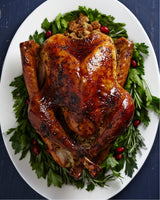
Thanksgiving
How to Brine a Turkey (and When Not To)
The short answer: brine only a turkey that has nothing added to it, keep the turkey and the brine at 40°F or below the whole time, and don't go longer than your recipe calls for (USDA advises no more than two days). Skip brining if the label says the bird is basted, self-basting, enhanced, marinated, pre-brined or kosher: it already contains salt. Brined or not, roast until a thermometer reads 165°F.
This guide answers the brining question. For choosing your turkey, how much to buy, thawing and the full Thanksgiving plan, see our Thanksgiving Turkey Guide.
What brining does
Brining means seasoning meat with salt before you cook it, either by soaking it in salted water (a wet brine) or by rubbing salt on it and letting it sit in the refrigerator (a dry brine). Done right, it seasons the meat beyond the surface and helps lean turkey stay tender and flavorful.
Brining is optional. A turkey that hasn't been brined is just as safe, and a good roast with a thermometer matters more than any brine.
First, check the label
Many turkeys are sold with salt already added, and brining them again can make the meat too salty. Morton Salt's brining guide says not to brine meat that has been basted, enhanced or marinated, or that is kosher. Under USDA labeling rules, a turkey injected or marinated with a solution of fat, broth, stock or water plus seasonings must be labeled "basted" or "self-basted."
Skip the brine if your turkey's label says:
- Basted or self-basting
- Enhanced, marinated or pre-brined
- Kosher
Also skip it if you plan to deep-fry the turkey; Morton's guide advises against brining before deep frying.
A turkey with nothing added is the one to brine. Mary's Free Range, for example, says nothing is ever added or injected into its fresh turkeys. Still, read the label on the bird you bring home.
How to wet-brine a turkey safely
- Pick a container. Use a food-grade brining bag or container big enough to keep the turkey fully submerged. Never use a household trash bag.
- Mix the brine. Follow a tested recipe or your brine kit's directions. As one example, Morton's guide calls for ½ cup of Morton Coarse Kosher Salt per gallon of water for an overnight brine (up to 14 hours), and recommends brining large items like a turkey overnight.
- Keep it cold. Keep the turkey and brine in the refrigerator at 40°F or below. If you use a cooler, the water must stay below 40°F the entire time.
- Watch the clock. Follow your recipe's timing. USDA advises not brining for longer than two days.
- Finish. Remove the turkey, throw the brine away (never reuse it) and pat the bird dry before roasting.
Salt brands measure differently
Kosher salts don't all weigh the same by the cup. Morton's ratio is written for Morton Coarse Kosher Salt; Morton notes that its own conversions apply only between Morton products. If you use another salt, such as Diamond Crystal, follow that brand's or your kit's directions, or weigh the salt instead of measuring it by volume.
Dry brining
A dry brine skips the bucket: you rub salt (and seasonings, if you like) over the turkey and leave it in the refrigerator before roasting. It needs far less fridge space than gallons of liquid. The same safety rules apply: start with a turkey that has nothing added, keep it at 40°F or below, and follow a tested recipe for the amount of salt and the timing.
A simple timeline for Thanksgiving (Thursday, November 26)
- Before you brine: if your turkey was frozen, make sure it has fully thawed in the refrigerator. Our Thanksgiving guide covers thawing times.
- Wednesday evening: mix the brine, submerge the turkey and refrigerate it overnight.
- Thursday morning: remove the turkey, discard the brine, pat it dry and season lightly (it's already salted).
- Roasting: check the temperature in the thickest part of the breast, the innermost part of the thigh and the innermost part of the wing. All should reach 165°F.
- Gravy: drippings from a brined bird can be salty, so taste before adding salt.
What you'll need
- A turkey with nothing added: Organic Whole Turkey – Mary's Free Range.
- A ready-made brine: Turkey Brine and Seasoning Kit – Whiskey Bent BBQ or Overnight Poultry Brine – Juicy Bird. Follow the package directions.
- A bag: the Turkey Brining Bag XL – HIC Kitchen.
- Salt for a homemade brine: Diamond Crystal Kosher Salt (measure it as explained above).
- For the table: Kinder's Roasted Turkey Bone Broth Gravy, or everything else in our Thanksgiving collection.
Frequently asked questions
Do I have to brine my turkey?
No. Brining is optional. Any turkey is safe to eat once it reaches 165°F in the breast, thigh and wing.
Can I brine a pre-brined or kosher turkey?
It isn't recommended. Those birds already contain salt; Morton's brining guide advises against brining basted, enhanced, marinated or kosher meat. Check your label.
How long should I brine a turkey?
Follow your recipe. Morton's guide recommends overnight for a turkey, and USDA advises not brining for more than two days.
Can I brine a turkey in a cooler?
Yes, if the water stays below 40°F the whole time. Add ice packs and check the temperature.
Can I reuse the brine?
No. Discard brine after use.
Sources
- Morton Salt, A Guide to Brining and Salt Conversion Chart.
- USDA, Brining Safely Will Bring Tender, Flavorful Meat to the Thanksgiving Table.
- USDA FSIS, Poultry: Basting, Brining, and Marinating and Safe Minimum Internal Temperature Chart.
- Mary's Free Range, Frequently asked questions.


